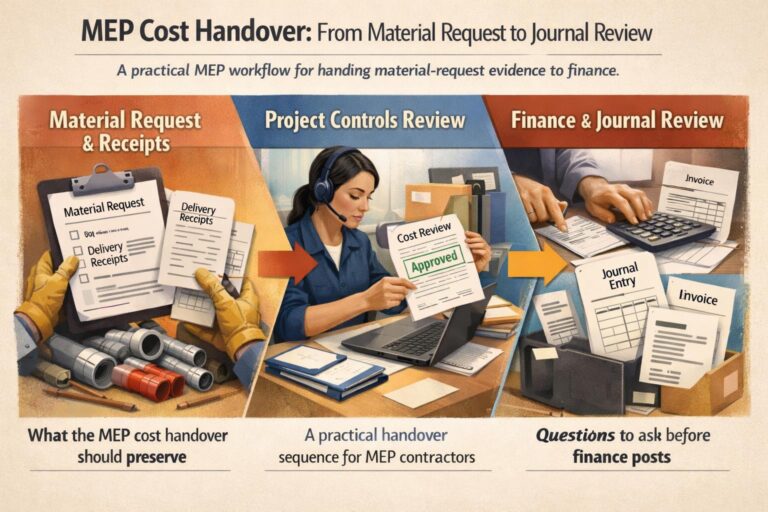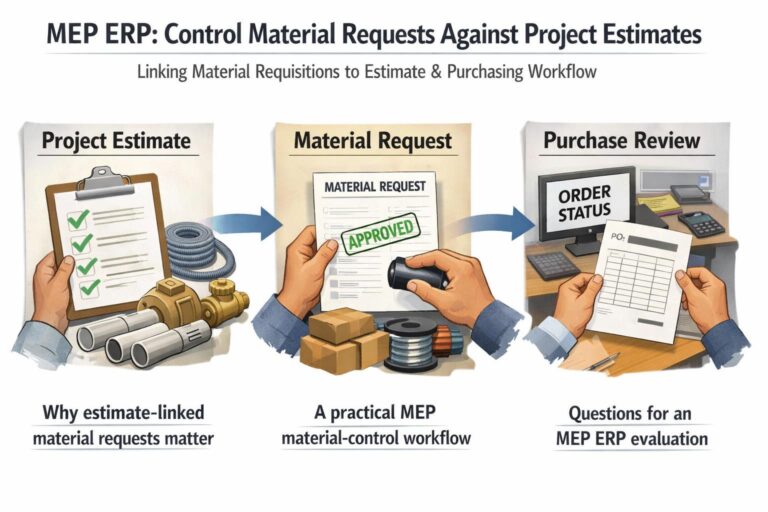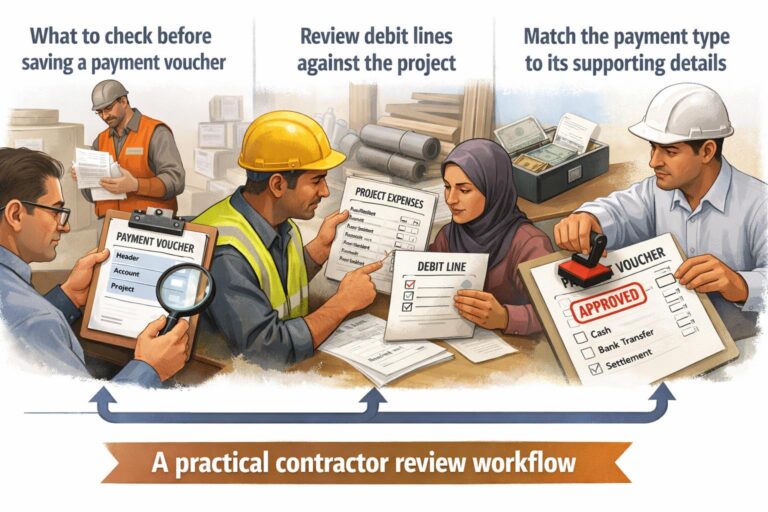


Purchase approvals are easier to review when a construction ERP keeps the request, project context and purchasing evidence connected. For UAE contractors, an audit trail review should answer a practical question: can the finance or procurement team explain who requested an item, which project or store it belongs to, and what evidence supported the purchasing decision?
What to Check Before Treating a Purchase as Approved
Start with the material requisition history rather than relying on an email or a spreadsheet. BlueberryERP documents filters for MRQ code, item code, activity, sub-activity, project code, store code, created by and requested by. These fields help a reviewer identify the transaction and separate the person who created the request from the person who requested the material.
| Review stage | Evidence to check | Control question |
|---|---|---|
| Request | MRQ code, item, requester and creator | Is the request identifiable and attributable? |
| Context | Project, store, activity and sub-activity | Does the requested material belong to the stated work context? |
| Price review | Item Price History, date range and LPO details | Can the reviewer compare the purchase with prior item pricing? |
| Accounting | Account, debit or credit, project and cost-centre fields | Can the financial entry be reviewed without an unbalanced posting? |
Use Item and Project Context to Challenge Exceptions
A purchase approval check should not stop at the approval label. Review the item’s price history using the documented date filters, item code, project code, store code, activity and sub-activity filters. The screen also identifies the latest order price from the most recent LPO document date. A material difference should trigger a human review of the item, date, project and LPO context; it is not, by itself, proof of an error.
For material requisitions, filter by requester and creator, then confirm the project and store shown in the selected MRQ. This creates a repeatable review path for procurement teams handling multiple sites, MEP packages or fit-out work.
Connect Approval Evidence to Finance Checks
Where a purchase-related transaction reaches accounting, review the journal lines and project classification. BlueberryERP’s documented journal-voucher rules require balanced debit and credit totals, at least two lines, a valid account and a project or cost-centre context where applicable. Each line must contain either a debit or a credit, not both. These checks help finance teams identify incomplete or incorrectly classified entries before posting.
The same principle applies to audit discussions: record the evidence reviewed, the exception identified and the human decision taken. An ERP can organize the underlying records, but approval responsibility remains with the authorized contractor team.
A Practical Review Routine for UAE Contractors
- Find the MRQ by code, item, project, store, requester or creator.
- Confirm that the request context matches the intended project activity.
- Compare relevant item pricing over an appropriate date range.
- Review the related LPO details where available.
- Check account, project and cost-centre classification in the accounting entry.
- Document the reviewer’s decision and any follow-up required.
Blueberry ERP supports construction companies that need connected project, procurement and finance records for review. Explore the Blueberry ERP platform to assess whether its documented workflows fit your approval-control requirements.