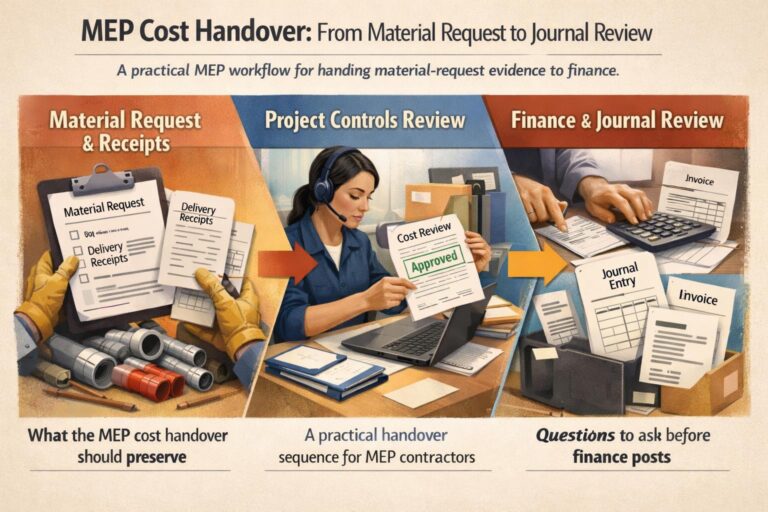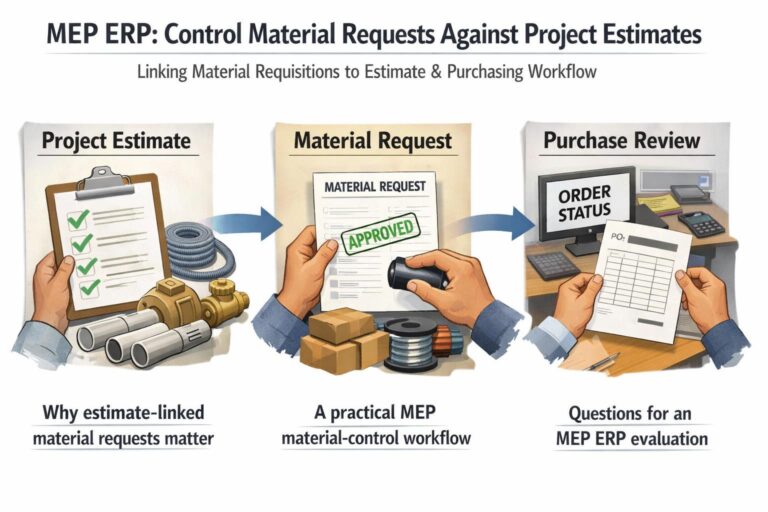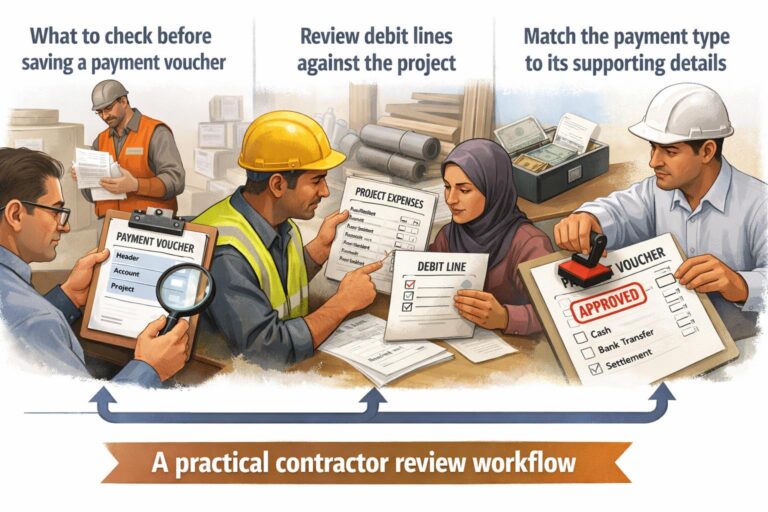


For UAE contractors, a BOQ variation can affect procurement, project reporting and the final margin. The practical challenge is not only recording the revised quantity or rate. It is maintaining a traceable link between the approved change, the revised project budget, related commitments and the accounting review.

What a controlled BOQ variation process should capture
Before a variation is treated as part of the working budget, the project team should record the original BOQ reference, the reason for change, the affected item or activity, the quantity and rate adjustment, the supporting approval and the resulting budget effect. This gives commercial and finance teams a common review point.
A useful control is to separate the proposed change from the approved change. A proposal can be assessed without changing the live budget. Once approved under the contractor’s delegated authority, the revised value can be reflected in project reporting and used as the reference for subsequent procurement and cost review.
From variation request to budget review
| Process stage | Evidence to retain | Control question |
|---|---|---|
| Identify | BOQ line, project, reason and requested change | Can the team identify exactly what changed? |
| Assess | Quantity, rate, cost effect and supporting documents | Has the commercial effect been calculated? |
| Approve | Decision, approver and approval date | Was the change authorized before budget use? |
| Review | Revised budget, commitments and actual-cost observations | Does project reporting reflect the approved position? |
- Identify: link the request to the BOQ line and project.
- Assess: document quantity, rate and cost effect.
- Approve: retain the decision, approver and approval date.
- Review: compare the revised budget with commitments and actual-cost observations.
This sequence helps prevent an unapproved instruction from being treated as available budget. It also gives project managers a repeatable way to explain why the forecast changed.
How ERP evidence can support the review
Blueberry ERP documentation shows that journal voucher lines can carry a project and classification, while debit and credit entries are recorded separately. That structure can help finance teams review accounting entries in their project context, subject to the company’s configured workflow and controls.
The manual also documents item price history with project and store filters, date-range filtering and access to related LPO details. These records can support a review of whether a variation’s material assumptions remain reasonable. They are evidence for review, not a substitute for commercial approval or contract administration.
A practical review checklist
- Confirm that the variation references the correct project and BOQ item.
- Keep the proposed and approved values distinguishable.
- Record the basis for quantity and rate changes.
- Review related purchasing information before committing spend.
- Check project-linked accounting entries after approval.
- Keep human approval with the authorized commercial or finance owner.
For contractors evaluating an ERP workflow, the key question is whether the system and operating procedure make each change understandable from request through financial review. Blueberry ERP can be considered within that broader control design, with implementation and configuration aligned to the contractor’s documented process.